
Sioux City, IA
Roller Replacement for Sioux City Garage Doors
Worn rollers on Sioux City's older torsion doors bind, shake, and jump track in winter cold. We replace nylon and steel rollers across the service area.
How It Shows Up
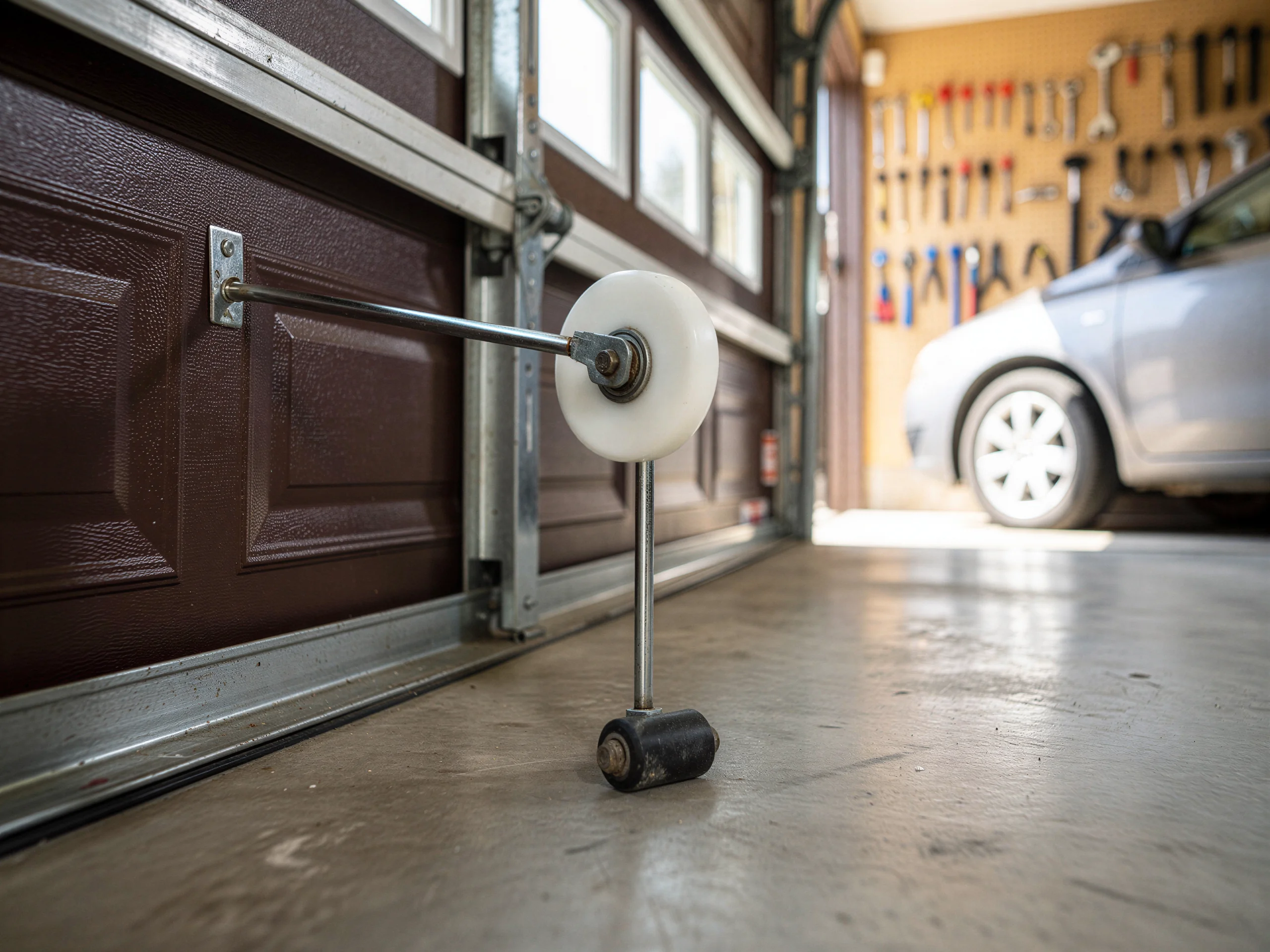
The first sign is usually noise. A door that used to glide now grinds, bangs, or shudders every time it passes the same spot on the track - almost always the top section, where the rollers carry the most load as the door goes over the curve into horizontal travel.
Bearingless stamped stems
Original steel rollers on a door this old ride on a stamped stem with no bearing, so once the raceway wears oval, every pass gets louder. You'll also see a door that hesitates, jerks, or seems to fight the opener partway through the cycle, and on worse cases a roller will jump the track entirely and leave the door cocked at an angle in the opening.
Worn factory roller sets
Homes across Sioux City's service area, with housing stock mostly dating to 1949-2000 and a lot of it from the 1960s and '70s, are hitting the age where the factory roller set is simply worn out rather than just dirty or dry.
Lube only masks noise
A quick squirt of lubricant quiets it down for a week, then the grinding comes back, which is the tell that it's a roller problem and not a track alignment issue.
Why It Happens Here
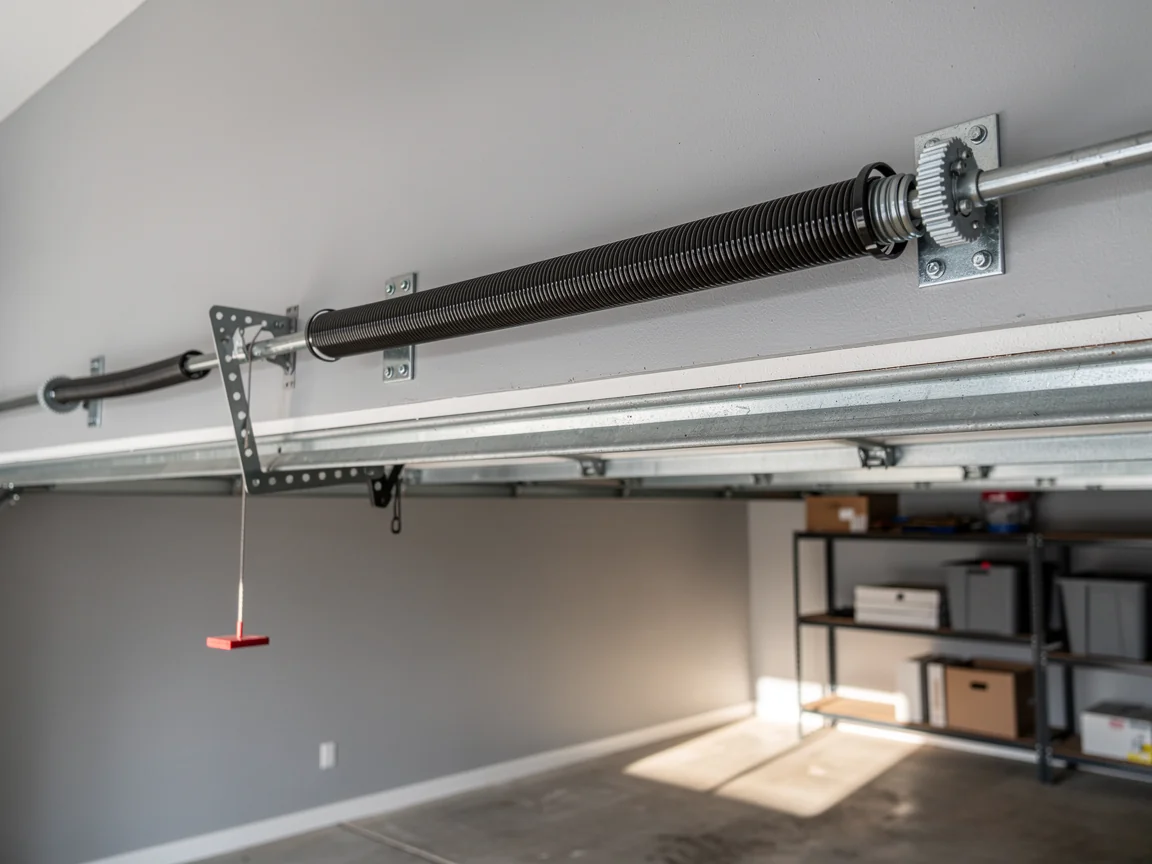
Nylon rollers fail by wear - the tire softens, flat-spots, and eventually cracks, and that process speeds up with temperature swings. Sioux City sits in a cold, severe winter climate band, and the hardware on an attached garage sees real cold for months at a stretch. Steel rollers, common on doors from the earlier end of that 1949-2000 build range, don't soften, but they do corrode at the stem and lose the factory lubrication faster in cold, dry air, so they squeal and bind rather than crack. Either way, the door was built with hardware sized for a house going up in 1973, the median year for this area, not for forty-plus winters of expansion and contraction on steel track. None of that is a defect - it's just the expected lifespan of a wear part running through a lot of freeze-thaw cycles, and it shows up at roughly the same age on doors across the six named communities this company works, whether the stock there runs older or closer to the 1970s median.
Can You Do This Yourself
A single roller swap on an unsprung section - with the door down and the spring unloaded - is within reach for someone comfortable with hand tools, and replacing a worn nylon roller with a sealed-bearing nylon roller is a straightforward upgrade.
Bottom bracket roller danger
Where it stops being a DIY job is the rollers near the bottom brackets, which sit under cable tension, and anything on a door with a broken or weakened torsion spring, where the door can drop under load while you're working.
Bad track defeats new rollers
We also won't pretend every roller set is worth replacing piece by piece - if the track itself is bent or badly worn on an older door, swapping rollers into a bad track just buys you a few noisy months before the same complaint comes back. That's a track and roller job together, not a parts swap.
Time on the Job
A straightforward full-set roller replacement on one door, with the track in decent shape, is a same-visit job - no special order parts, no return trip. What stretches it is finding the actual cause of the noise first: a worn roller on a door with a misaligned track or a cable starting to fray takes longer to diagnose than to fix, because the fix is quick once we know which part failed. Across the roughly 2,080 owner-occupied houses and 3,613 households in this service area, median income here runs about $93,264, and most homeowners we talk to want the job scoped honestly before any tools come out rather than sold a bigger repair than the door needs.
Questions
Common questions
How many rollers does a standard garage door have?
Most residential doors run 10 to 12 rollers depending on the number of sections, with extra rollers at the bottom brackets where cable tension adds load. We check the full set, not just the noisy one, since a roller running rough usually has a neighbor close behind it.
Are nylon rollers better than steel?
Nylon with sealed bearings runs quieter and handles the cold better than old stamped-stem steel rollers, which is why most replacements on older Sioux City-area doors move from steel to sealed nylon rather than swapping steel for steel.
Why does my door only make noise in cold weather?
Cold air thickens old grease and shrinks metal slightly, so worn rollers that were quiet in summer start binding and squealing in winter. It's a sign the roller is near the end of its life, not that something new has broken.
Explore more
Explore More Services In Sioux City, IA
Garage Door Service for Sioux City's Cold-Weather Failures
Sioux City homes built mostly between 1949 and 2000 fight cold-weather garage door failures every winter. Learn more →
Garage Door Opener Repair for Sioux City Homes
Opener repair for Sioux City homes built mostly from 1949 to 2000, where cold winters and original hardware combine to wear out drive gears and sensors early. Learn more →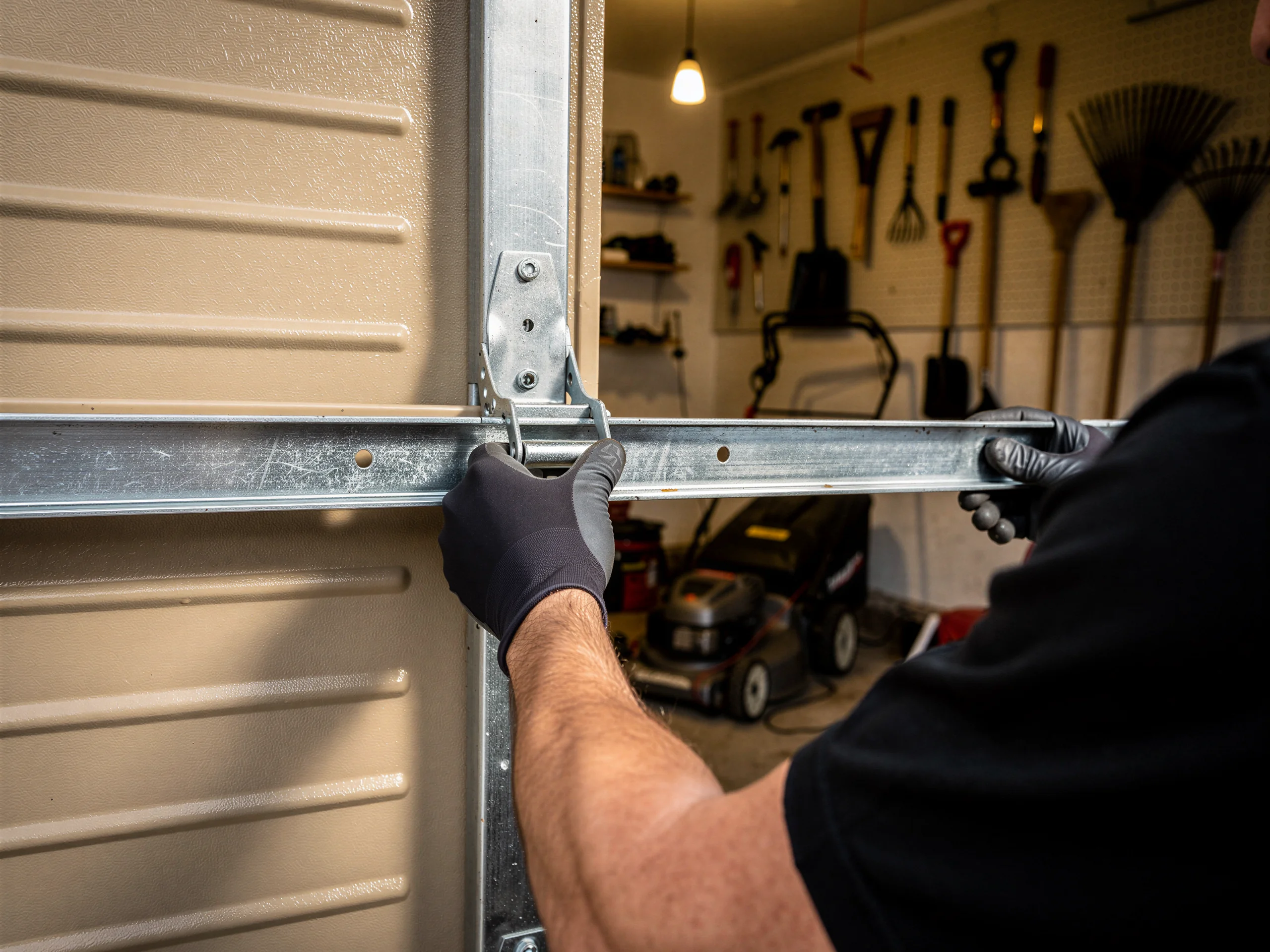
Garage Door Repair for Sioux City Homes
Garage door repair for Sioux City homes built mostly in the 1960s and 70s, where cold winters and aging torsion hardware cause the most common breakdowns. Learn more →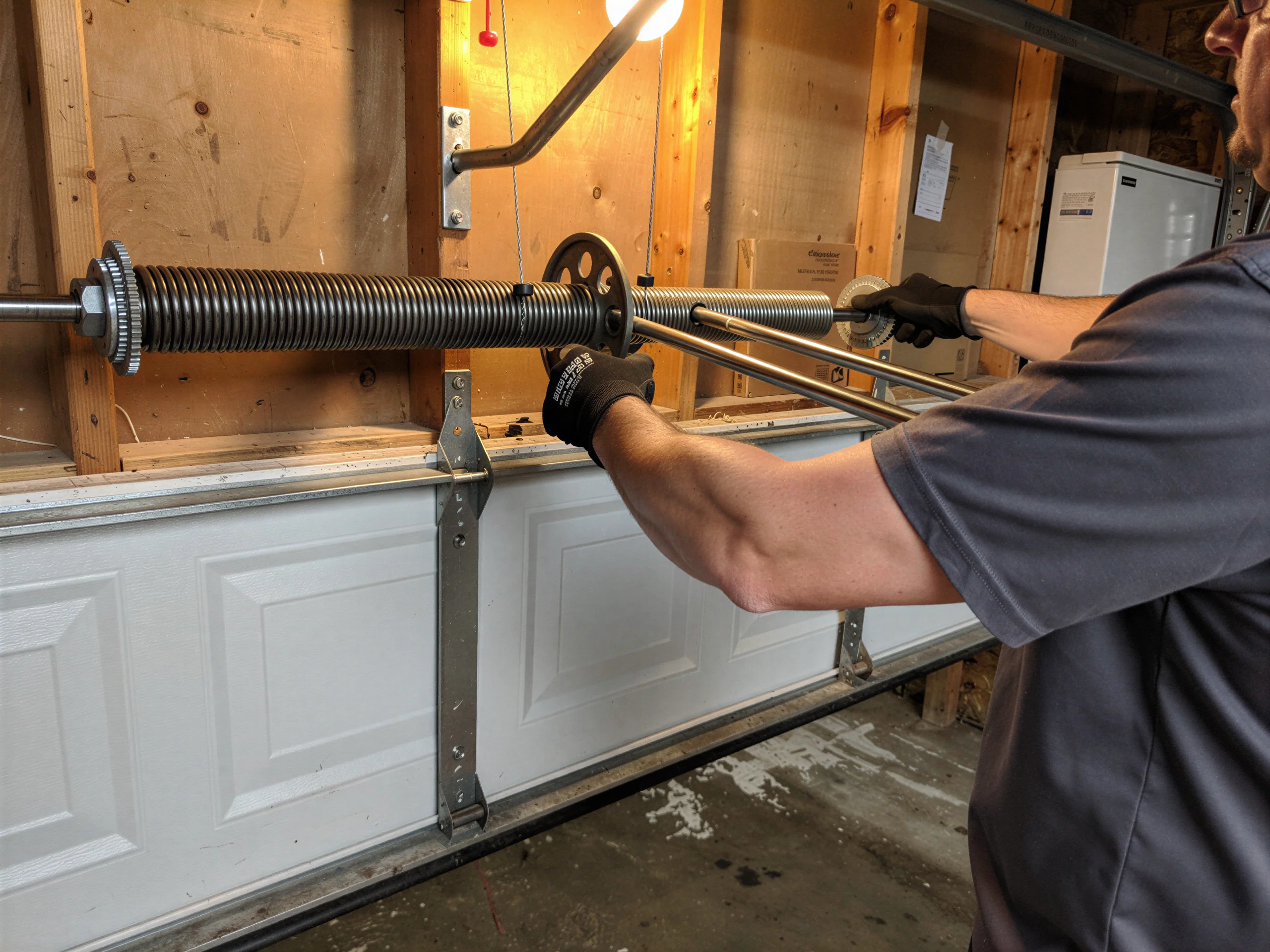
Garage Door Spring Repair for Sioux City Homes
Broken torsion spring on a Sioux City garage door? Learn more →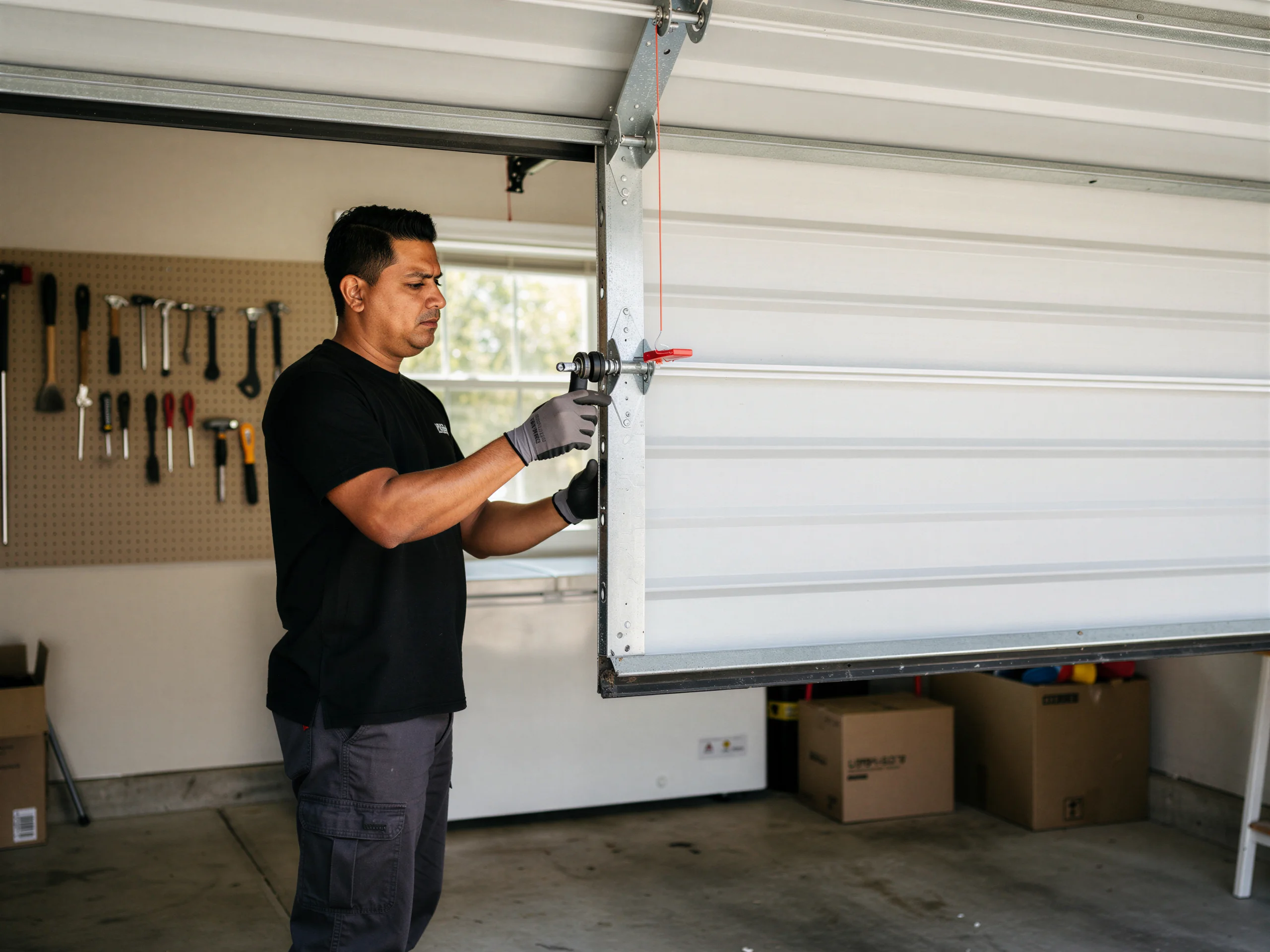
Garage Door Off Track: What's Going On and What It Takes to Fix
A garage door off track in Sioux City usually traces back to 1960s-70s hardware and hard winters. Learn more →
Ready when you are
Need a garage door sorted in Sioux City?
Sioux City Garage Door Pros repairs and installs garage doors, springs and openers in Sioux City, IA and the surrounding area.