Local detail
Doing Nothing For Now
Not every noise or sticky spot means a call today. A door that closes a half-second slower than it used to, or a track that ticks once on cold mornings, can usually wait a few weeks if the door still reverses when it hits something and the cables look even on both sides. What can't wait: a door that drops instead of lowering smoothly, a spring with a visible gap in the coil, or a cable that's frayed near the bottom bracket. On the older stock common around here - houses built mostly between 1949 and 2000, with a lot sitting around 1973 - those original torsion springs and single-wall panels have had decades of winter cycling, and a spring that's been quietly working all that time doesn't give much warning before it lets go. If the door is still under control and nothing is grinding metal-on-metal, waiting for a scheduled visit instead of an emergency one is reasonable. If it's dropping unevenly, it isn't.
The area
What Is Going On
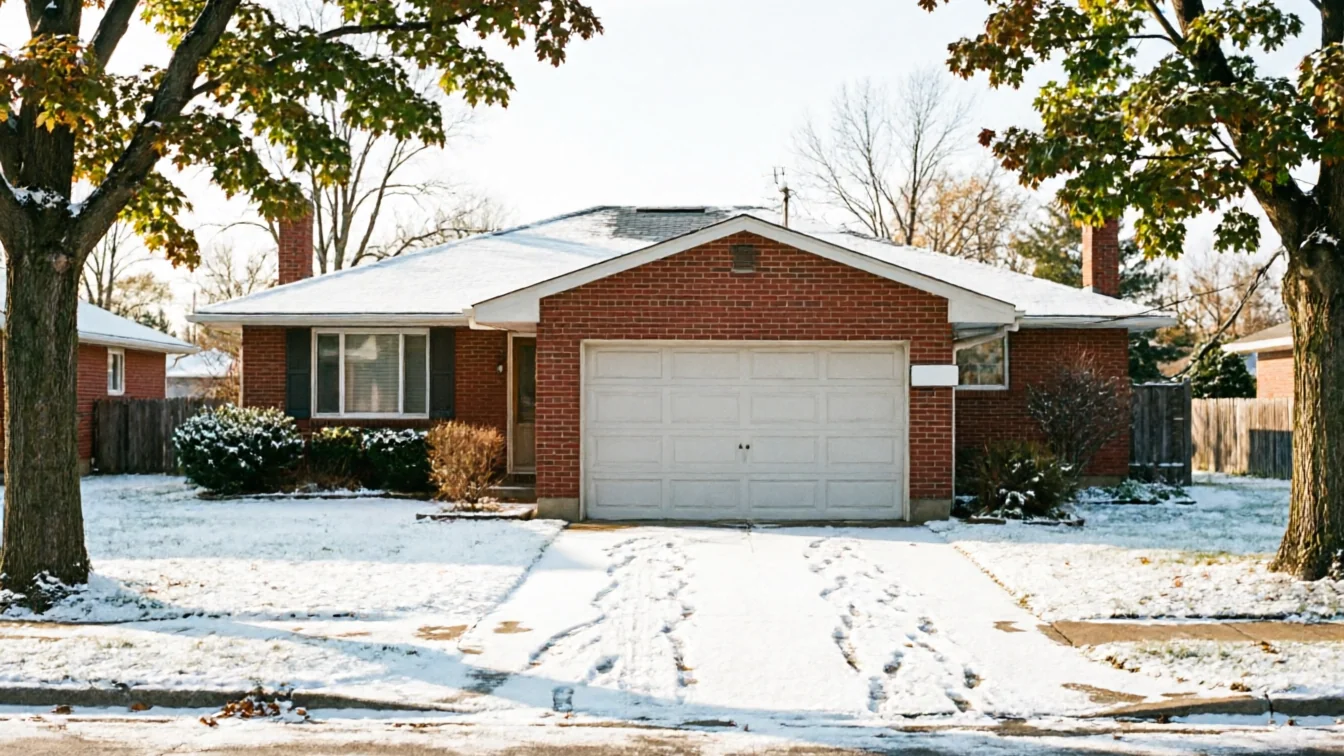
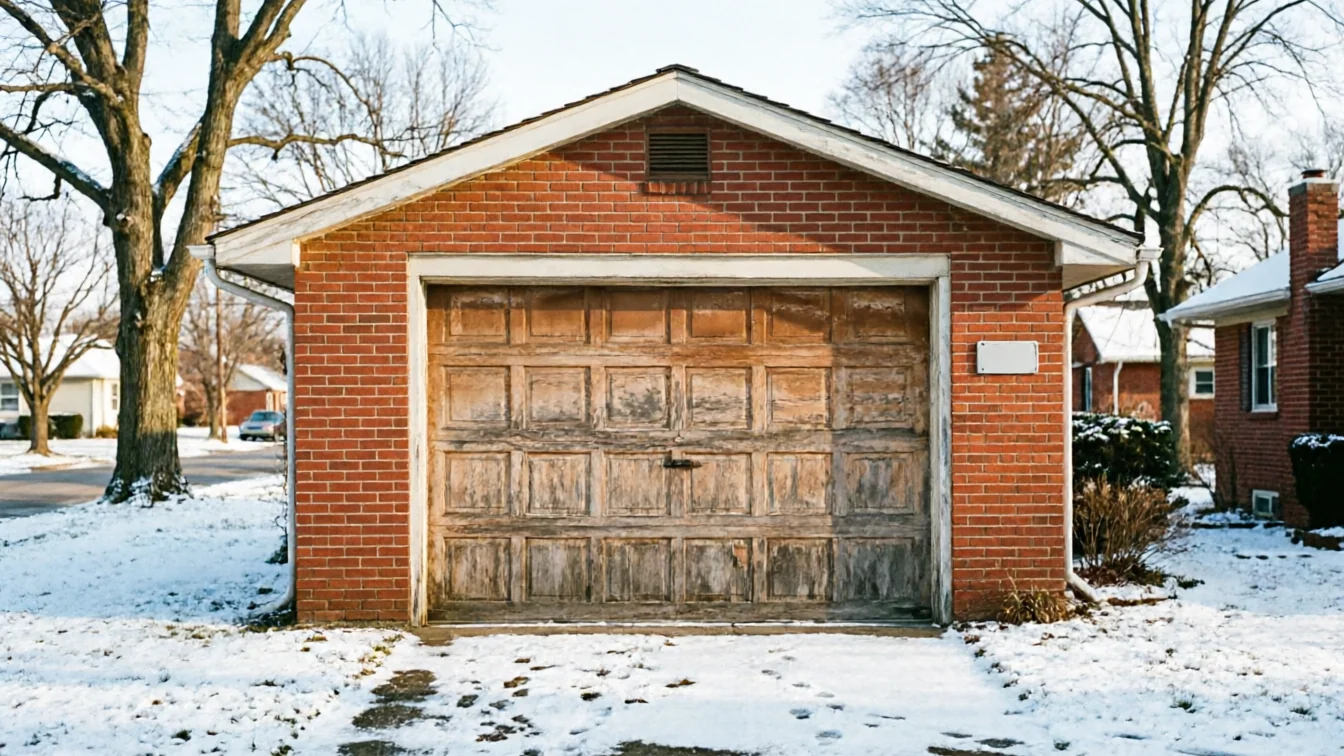
A lot of what we run into traces straight back to the housing stock itself. Across this service area's 2,080 owner-occupied houses, construction runs heavily from the 1949-2000 range, with the median build year landing around 1973 and most of it concentrated in six named pockets of 1960s and 70s stock. Doors from that era are mostly non-insulated single-layer steel or wood panels, hung on side-mounted torsion hardware that was standard then but isn't what gets stocked on trucks now. The springs on those setups were sized for the lighter doors and milder opener loads of that period. When a homeowner adds a heavier insulated replacement panel onto old track and old brackets, or swaps in a stronger opener without touching the spring, the hardware ends up carrying more than it was built for. None of this is a defect - it's just a door built for a different decade still doing its job in this one, with parts that are harder to match than they used to be.
What we find
Checking It Yourself
A few things are safe to check on your own. Pull the emergency release and move the door by hand - it should take light, even effort the whole way up; heavy spots usually mean a spring losing tension. Look at the weatherstripping along the bottom and sides for cracking or gaps; on doors from the 1960s-70s stock common here, that seal is often original and brittle, not just dirty. Check the track brackets for rust at the base, which shows up more on panels that sat untouched for decades. What you shouldn't do yourself: touch the torsion spring or its winding bars. That part stores enough force to cause a serious injury, and it's the one job on an older door where the age of the hardware makes the failure mode less predictable than on something installed last year. If the balance test feels off or the spring looks stretched unevenly, that's a call, not a weekend project.
How we work
What Local Conditions Do
Sioux City sits in a climate band classified as cold and severe, and that shows up directly in how garage door hardware ages here. Steel torsion springs lose tension faster across wide seasonal swings than they do in milder regions, and the grease in older rollers and hinges thickens in deep cold, which is part of why a door that moved fine in October can bind by January. Concrete garage floors also contract slightly in sustained cold, which can throw an older track's alignment off by just enough to cause rubbing that wasn't there in warmer months. This pattern isn't unique to one neighborhood - it runs the same way out through Sergeant Bluff, Hinton, and Lawton, since all of it sits in the same cold-severe band. With a median household income of $93,264 across the area, plenty of owners here decide, once a spring or opener on a 1970s-era door starts failing, that replacing the whole setup makes more sense than patching a 50-year-old system piece by piece.
Talk to a local pro
Garage door trouble in Sioux City?
Same-day service with honest, upfront quotes.