Local detail
Doing Nothing For Now
Not every noise or slow door means you need a truck in your driveway this week. If the door still opens and closes on command, closes all the way, and the opener doesn't strain or reverse itself, you can usually wait. We'd rather tell you that than run a call for nothing.
Where it stops being a wait-and-see: a spring that's visibly separated, a door that drops the last foot instead of lowering, or cables fraying at the drum. Those get worse fast, especially once cold weather sets in and steel contracts. A door that's merely noisy on a 1960s or '70s track, which describes a lot of what's still in service around here, can often run another season with a lube and adjustment instead of a full teardown.
The honest limit: if your opener is original to a house built in the 1970s and the circuit board is failing, we're not going to chase parts for a unit that old. Replacement is usually cheaper than the search, and we'll say so on the call instead of billing you for the attempt.
The area
What Is Going On
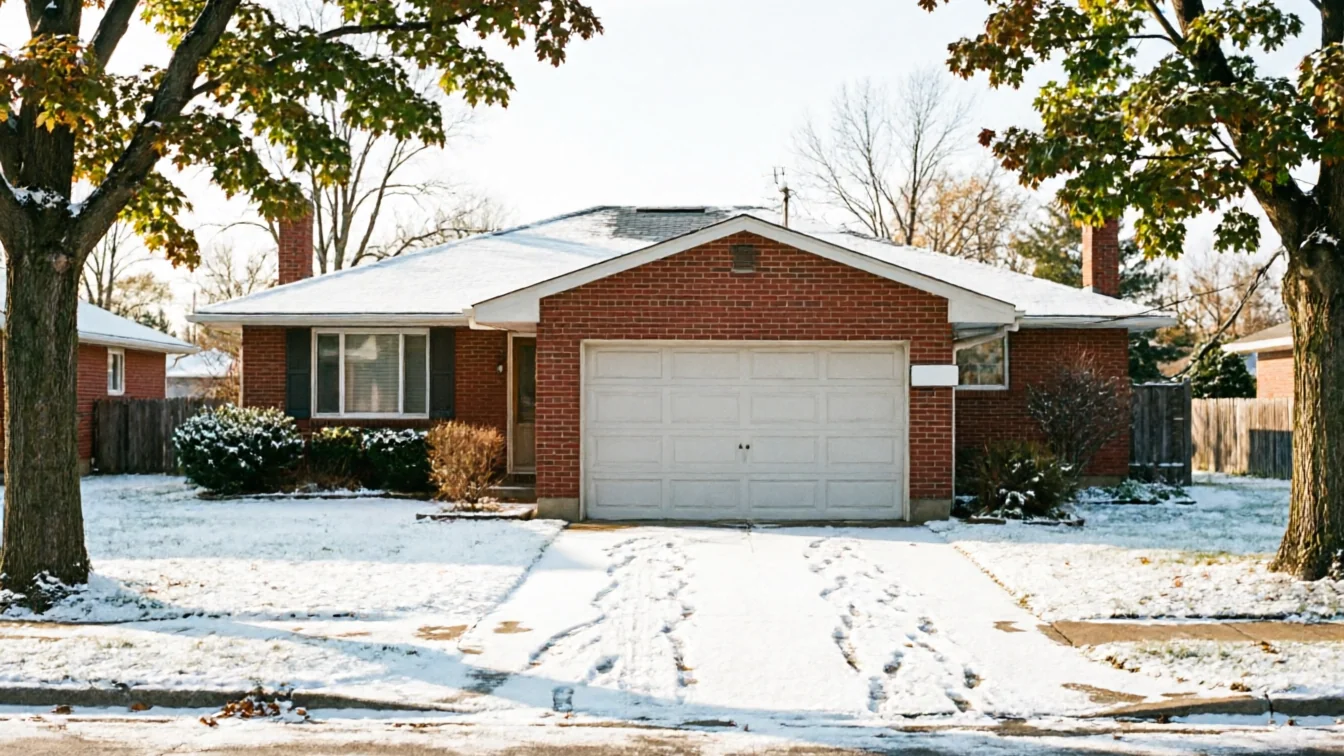
Most of the housing stock in this service area went up between 1949 and 2000, with a lot of it clustered in the 1960s and '70s. That matters because garage doors and openers from that era weren't built to current spring-cycle standards, and a good share of what we're called out for is original hardware finally giving out after decades of use, not a new problem.
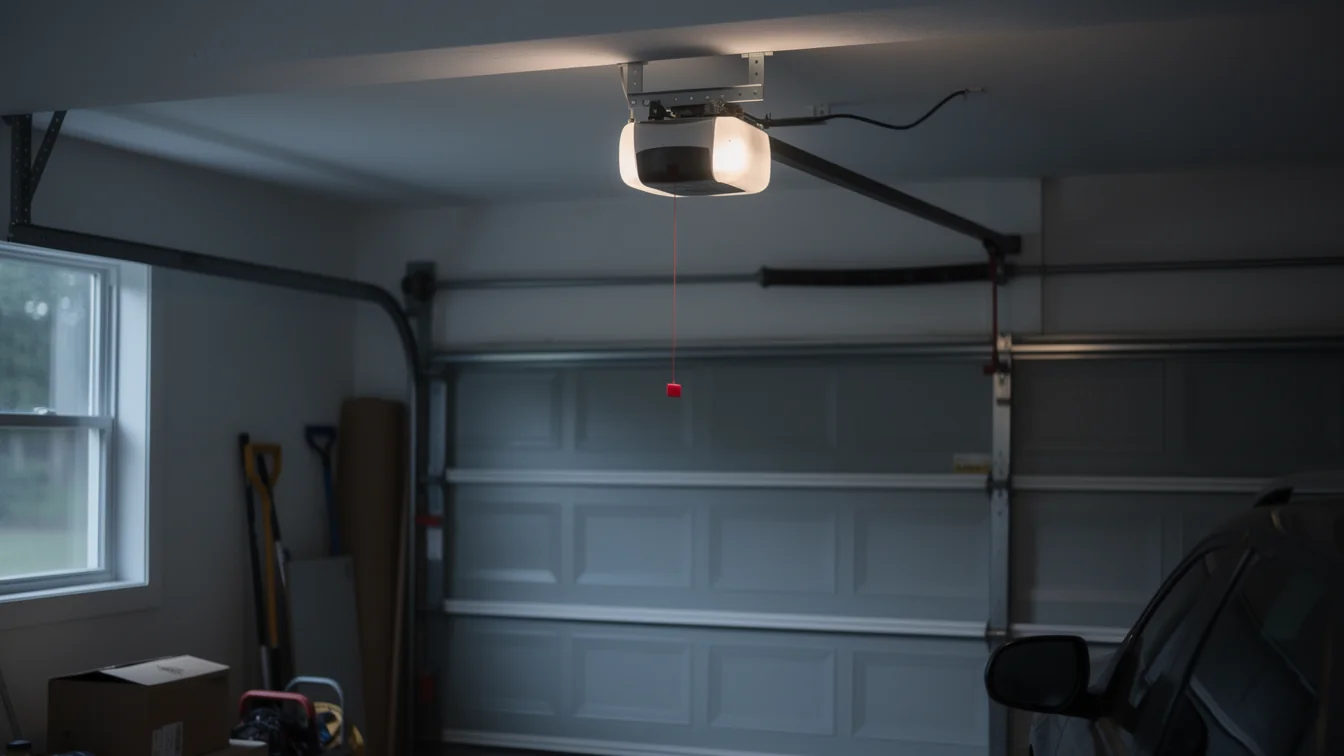
A service call starts by figuring out which of three things is actually broken: the door itself (panels, rollers, track, hinges), the spring and cable system that counterbalances its weight, or the opener that drives it. These fail independently. A door that won't open could be a dead opener capacitor, a snapped torsion spring, or a track knocked out of alignment, and each one is a different repair with a different cost.
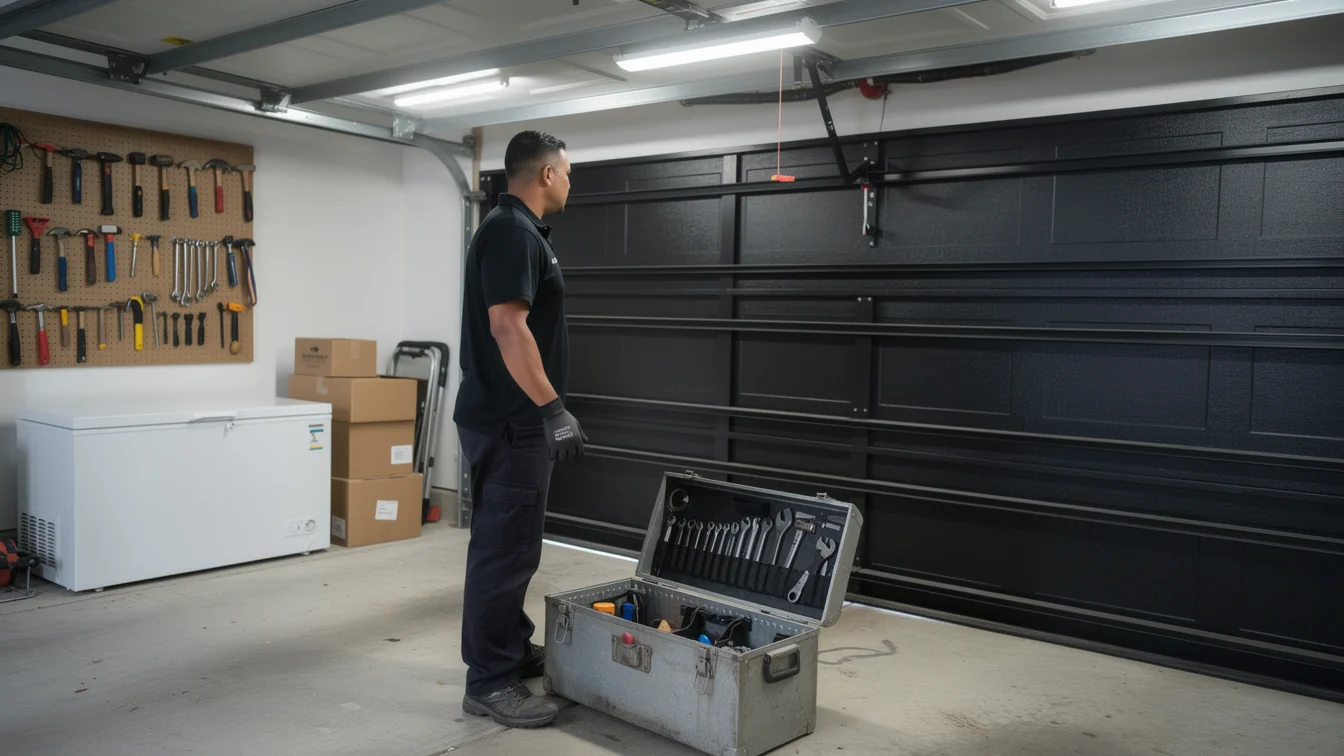
On a 1973-vintage door, the finding is often a torsion spring sized for a lighter original panel that's since been swapped for a heavier insulated one, which throws off the whole balance. We check spring wind, cable wear, hinge wear, and the opener's force settings before we touch anything, because fixing the wrong part doesn't fix the door.
What we find
Checking It Yourself
Before you call, a few things take two minutes and tell us a lot. Pull the manual release cord and try lifting the door by hand. It should move smoothly and stay roughly level wherever you let go. If it's heavy, drops on one side, or won't stay put, that's spring or cable, not opener.
Look at the springs themselves, usually two torsion springs mounted on a bar above the door. A gap in the coil means a broken spring. Don't try to wind or unwind it yourself; that bar is under enough tension to cause real injury.
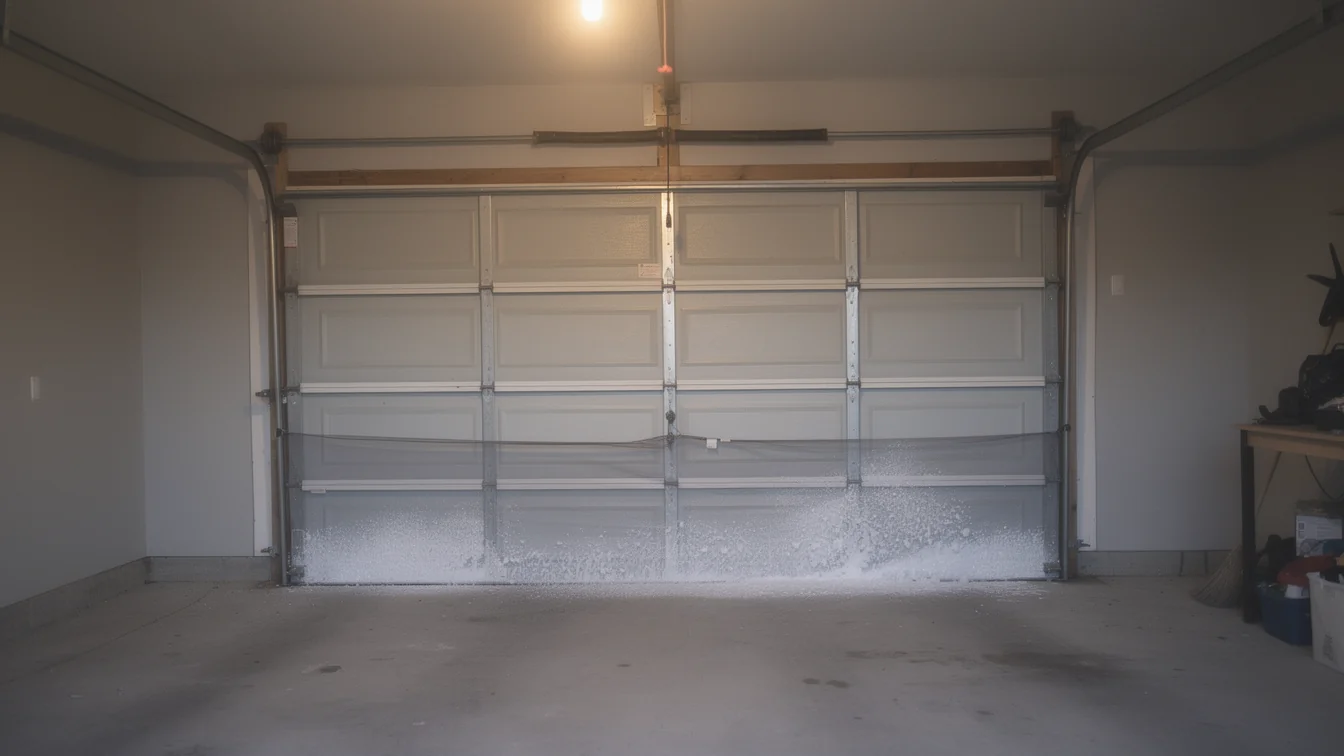
Check the tracks for dents or gaps where the rollers ride, and check the bottom weatherseal for cracking, which is common on houses with older concrete slabs settling over fifty-plus years. If the opener light blinks a number of times and stops, write that number down; it usually maps to a specific fault code we can look up before we even leave the shop.
What you can't safely check: spring tension, cable condition under load, and anything involving the opener's internal gears. Those need the door in a controlled position, not mid-cycle.
How we work
What Local Conditions Do
This area sits in a severe cold climate band, and that changes what breaks and when. Steel springs lose tensile flexibility in sustained cold, so the first hard freeze of the season is when a spring that's been marginal all year finally lets go. Openers see the same thing: cold grease in the gearbox makes the motor work harder, which is why a struggling opener in January often isn't actually failing, it's just fighting thickened lubricant.
With roughly 3,613 households and 2,080 owner-occupied houses across this territory, and a median build year around 1973, a lot of what we service is original equipment meeting its first real cold-weather test in decades. Homes with attached garages that share a wall with living space also see more condensation on the door's interior face, which speeds up rust on hinges and track bolts faster than it would on a detached garage.
Our calls run out from Sioux City to Sergeant Bluff, Hinton, and Lawton, each about ten miles or less, and out to Salix, Moville, and Sloan further out. Drive time isn't the limiting factor; the age and condition of the door usually is.
Talk to a local pro
Garage door trouble in Sioux City?
Same-day service with honest, upfront quotes.