Local detail
Doing Nothing For Now
If your opener still runs but the chain skips during a cold snap, you don't have to call anybody today. A lot of what feels like opener trouble in this area is really just a belt or chain that's stiffened up overnight and loosens again once the garage warms a degree or two. We'd rather tell you that than send a truck for something that fixes itself by afternoon.
Where it stops being a wait-and-see thing: the opener reverses on its own, the light blinks a code you can't clear, or the door won't move at all after a power blink. Those are motor or logic board symptoms, not cold-stiff-chain symptoms, and they don't improve with patience.
One honest limit here: if your opener is original to a house built in the early part of that 1949-2000 run, parts for it may simply not exist anymore. At that point we're not troubleshooting a board, we're talking about a new unit, and we'll say so instead of billing you for a diagnosis on a dead platform.
The area
What Is Going On
This area sits in a climate band rated cold-severe, which is a different problem for an opener than heat ever is. Cold doesn't just slow a chain down - it thickens grease in the gearbox, makes aging capacitors in the motor work harder to start, and after a hard freeze-thaw cycle it can crack a plastic drive gear that was already near the end of its life.
Power cuts make this worse because an opener motor draws its heaviest current at startup, right when a brownout or a flickering line is most likely to trip its internal protection or just stall it mid-cycle. A door caught half-open after a cut, with the opener now confused about where it is, is one of the more common calls we get after a grid hiccup.
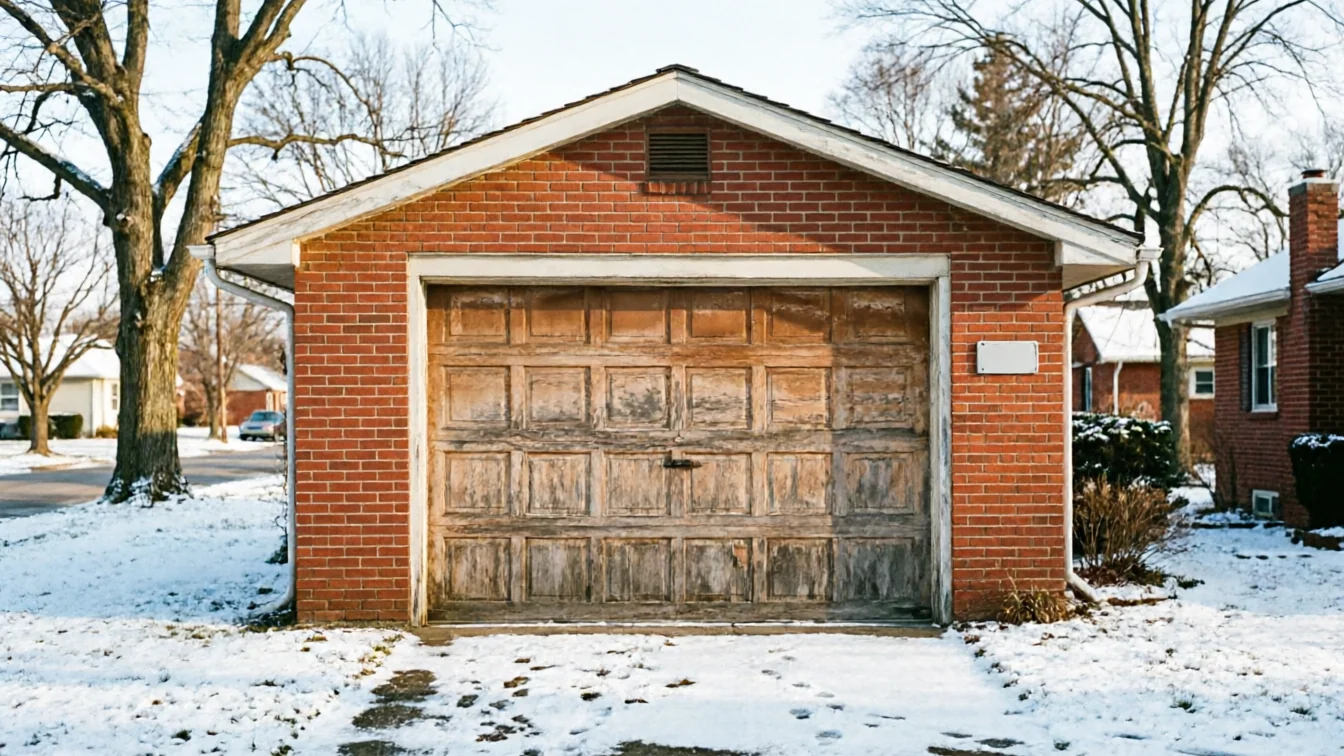
Most houses we work on were built between 1949 and 2000, with the heaviest concentration from the 1960s and 70s across six areas in the service territory. A lot of those original openers have been through several of these cold-and-cut cycles already, and each one takes a little more out of the motor windings and the logic board than the last.
What we find
Checking It Yourself
Before you call, there are a few things worth fifteen minutes. Pull the manual release and move the door by hand - if it's heavy or uneven, the opener isn't your real problem, a spring is, and no amount of opener work fixes that.
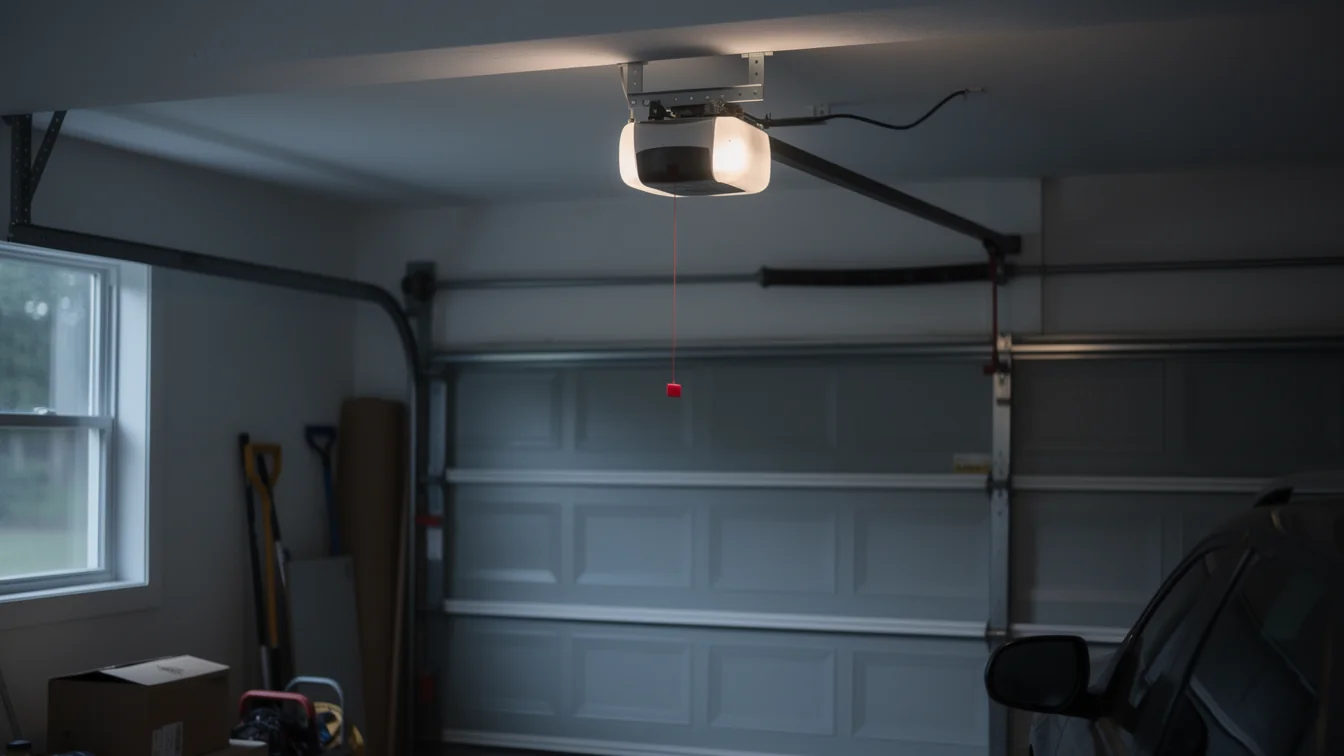
Check the wall unit for a blinking light or error count. Most mid-2000s-and-newer openers flash a number that corresponds to a specific fault - count the blinks before you call so whoever comes out already knows what they're looking at.
After a power cut specifically, check whether the opener thinks the door is open when it's closed, or vice versa. Unplug it for thirty seconds and plug it back in - that clears a confused travel-limit memory more often than people expect, and it costs you nothing.
If the opener hums but the door doesn't move, that's almost always the drive gear, a $20-30 part on most models, but it requires taking the unit down from the ceiling to get at it, which is where a lot of people stop doing it themselves.
How we work
What Local Conditions Do
Across the service area there are 3,613 households, with 2,080 of those owner-occupied houses - a sizable share built during that same 1949-2000 window. That means a sizable share of openers installed when those homes were new are now old enough that cold-weather failure and a dead circuit board after a power cut show up together more than coincidence would suggest.
Median household income here runs $93,264, which puts straight replacement within reach for most owners rather than chasing parts for a unit that's outlived its run. We'll still repair what's repairable - we're not selling you a new opener because the old one skipped a chain once - but when a board is fried after a cut on a twenty-plus-year-old unit, replacement is usually the honest answer, not the upsell.
We run out to Sergeant Bluff at seven miles, Hinton and Lawton at ten, Salix at fourteen, Moville at sixteen, and Sloan at twenty. Same cold-severe climate band applies across all of it, so the opener problems we see don't change much town to town within that radius - the housing age is what varies.
Talk to a local pro
Garage door trouble in Sioux City?
Same-day service with honest, upfront quotes.